Monday, 30 September 2013

Minimum-viable identity provider

What's required in a minimum-viable IDP (Identity Provider) in 2013?

When I talk about viability I really mean "competitiveness" and I suppose what I'm really asking is what does it take to get RPs (Relying Parties) to integrate and users to authenticate with an IDP?

The list of requirements below was first published in a presentation I gave at Over The Air 2013. It's the result of hundreds of conversations with RPs and user over the last few years.


Valuable accounts. Are the accounts attached to real people who have been SMS verified? Does the IDP fight off attempts to create fake and spammy accounts?

Security. Are the accounts stored using salting and hashing? Do users authenticate using multiple factors? Are precautions being taken to ensure that user accounts are protected?

Rich profiles. Does the IDP offer data that you can use to personalise your service such as profile data, photos and social/interest graphs?

Ubiquitous APIs. Does the IDP offer ReSTful APIs, native SDKs, client libraries in various languages and support for RTL languages?

Escape hatches. Does the IDP lock-in RPs and/or users? Can the RP obtain the user's verified email address so that the user has the option of using a different IDP with the same RP account? Is the RP forced to build their own post-registration flow?

Business model. Does the IDP make money or otherwise benefit from providing this service? Do they have a compelling incentive to stay in this business?

The final and most controversial ingredient is scale. Most people would say that all other things being equal an IDP with more accounts is better than an IDP with fewer accounts. I'd suggest that it's better to have accounts that are appropriate to the service the RP is trying to provide. For instance for Statigram the best IDP is Instagram but for Favstar.fm the best IDP is Twitter and, of course, for any service that uses Google services (like Youtube, Android, Drive, etc) the best IDP is Google+.

The items listed above are just the necessary but not sufficient features of a viable IDP. Successful IDPs will still have to identify and provide additional value in order to get widespread adoption by users and RPs.

Wednesday, 25 September 2013

Beyond the NASCAR

People in the identity world worry a lot about the NASCAR problem. 

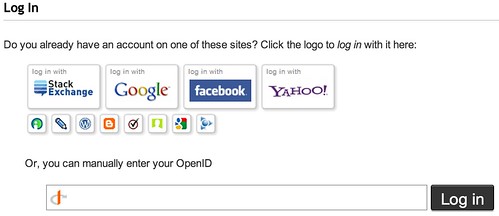
They worry that showing a large set of buttons will hurt conversion rates (because of the paradox of choice) and confuse users who don't remember which IDP (identity provider) they used on a particular site+device combination. 

Stack Overflow NASCAR

I don't think that's a big problem nowadays. 

That's because we're down to a fairly small set of viable identity providers (henceforth known as IDPs). Most of the others are either dead(MyOpenId), new (Amazon Login) or only useful in specific niches (GitHub, Instagram, Tumblr, LinkedIn etc).

If we look at Stack Overflow's data we see that 5 IDPs are used by 98.6% of visitors but everybody has to deal with the cognitive load of choosing between the 12 buttons and 1 form field. 

Reducing the set of buttons to 3 would still give users a choice whilst reducing cognitive load. By cutting down to just these 3 IDPs they'd have covered the vast majority (in Stack Overflow's case 92.02%) of potential users of their site and greatly simplified the experience. 

However if you prioritise providing access for 100% of your users over providing the best possible experience for the majority then you have several alternative strategies available to you:
If your goal is optimising the percentage of users who sign-in and making sure those people get the best possible experience then here's what I suggest:

  • Use Google+ and Facebook buttons (there are also going to be scenarios where Weibo/Renren/VKontakte are appropriate additions). 
  • Then use checkSessionState() and FB.getLoginStatus() to find out if the user is already signed in to Google or Facebook. The mobile SDKs have equivalent APIs.
  • Then suggest whichever account the user is already using by putting that button first and/or making it bigger. 

We've even published a guide to handling the scenario where the user is signed-in to both IDPs and you can automatically bypass the sign-in screen. 

However there's still the situation where a user prefers different IDPs on different machines: for instance if they work in a company that blocks Facebook at the firewall or they prefer Google+ on Android but Facebook on iOS. For those users a naive NASCAR implementation leaves them with one account on your service per IDP. 

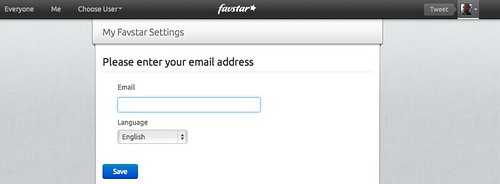
The easiest solution to is to ask for the user's email address and use that to correlate all the accounts they use to login to your service. That way the user never has to worry about creating duplicate accounts. Of course this does restrict you to IDPs who can offer a verified email address. 

The only IDP this excludes is Twitter. If you are using Twitter as an IDP then you'll have to either capture (and verify) the user's email address in a post-registration step. 

Favstar.fm asking for email after using Twitter for identity

Sometimes you have to do things the hard way. Usually it's because you have large numbers of accounts with unverified email addresses (for instance if you used a standard OpenID IDP or used Twitter without capturing and verifying email addresses) or you're migrating users from one IDP to another. 

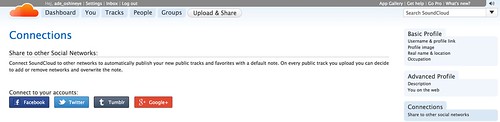
In that case you have to provide a 'connect flow.' This is where the user signs-in to your service with one IDP and you ask them to 'connect' with additional IDPs. Afterwards you know that the same person owns that set of accounts even if they have different email addresses associated with them. 

Connecting accounts on Soundcloud site

The heuristics above mean that the NASCAR anti-pattern doesn't have to harm conversion rates or UX.

If you'd like to learn more about this stuff I'll be attending Over The Air 2013 where I'll be walking people through examples of these heuristics in production and talking about the multi-device multi-platform post-NASCAR future of identity. Join me. 

Wednesday, 18 September 2013

Why doesn't this blog allow comments?

Should your blog have comments? That's one of the perennial questions that every blogger faces. Are comments a way to bring in vital feedback from the-people-formerly-known-as-the-audience or are they merely a mechanism for enabling strangers to spew hatred and bile on a page with your name attached?

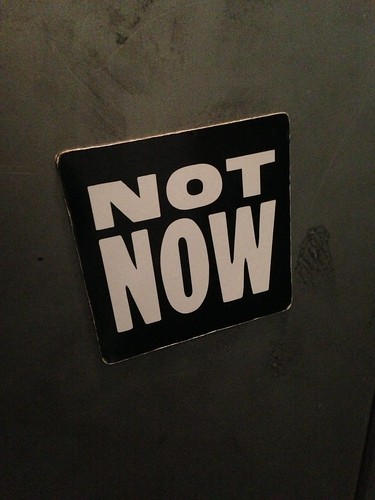
Not now

Historically my position has been "comments are bad, run away." My reasons included:
  • I really don't want to deal with spam. The only thing worse than having spam on your blog is using moderation systems that mean I have to read every spammy comment in order for you to get a better experience. I like you but I don't like you that much.
  • BuzzGoogle+ is a better conversational network than my blog. Every post on my blog ends up on my blog's Google+ Page as well.
  • BuzzGoogle+ also has the advantage that there can be multiple conversations by completely disjoint communities about the same blog post.
  • BuzzGoogle+ emphasises Real Names and Serial Identity. This means I can look at people's activity stream to see what they've been posting about, commenting upon and sharing. Of course, just because you're using your real name doesn't mean that you won't say or do things that I find objectionable but which your community finds laudable.
  • I agree strongly with Derek Powazek that your right to free speech stops where my territory starts.
  • I think it's a terrible idea to put everybody who has an opinion on a topic into the same room. That invariably leads to name-calling because they have so little common ground or shared vocabulary. For every person who understands the topic and wants to discuss nuances there'll be 10 people who would like a clearer explanation of the fundamentals. 
All of the above are good and sound reasons for disabling comments. So why have I just enabled comments on this blog?

The main reason is that I have new technology and I want to see if, just this once, technology can solve a social problem. The secondary reason is that I'm interested in aggregating the conversations around my blog posts. My hope is that this aggregation will help me discover people who are saying interesting and insightful things about what I've written.

I could be wrong but I live in hope.

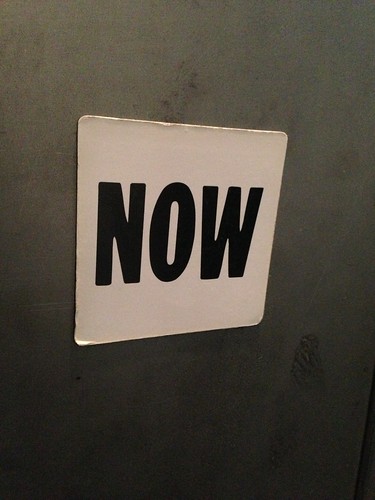
  Now

Wednesday, 19 June 2013

In Praise Of Shadows

I bought In Praise Of Shadows by Junichiro Tanizaki in a Dutch museum. It's an admirable corrective for anyone who feels that their taste has been overwhelmed by any particular aesthetic.

In praise of shadows

"a man who has a family and lives in the city cannot turn his back on the necessities of modern life" p3

"I always think how different everything would be if we in the Orient had developed our own science" p13

"how much better our own photographic technology might have suited our complexion, our facial features, our climate, our land" p16-17

"Of course this 'sheen of antiquity' of which we hear so much is in fact the glow of grime. In both Chinese and Japanese the words denoting this glow describe a polish that comes of being touched over and over again,  a sheen produced by long years of handling--which is to say grime." p20

"elegance is frigid" p20

"Sometimes a superb piece of black lacquerware, decorated perhaps with flecks of silver and gold -- a box or a desk or a set of shelves -- will seem to me unsettling garish and altogether vulgar. But render pitch the void in which they stand, and light them not with the rays of the sun or electricity but rather a single lantern or candler: suddenly those garish objects turn somber, refined, dignified. Artisans of old, when they finished their works in lacquer and decorated them in sparkling patterns, must surely have had in mind dark rooms and sought to turn to good effect what feeble light there was." p23

"The quality that we call beauty, however, must always grow from the realities of life, and our ancestors, forced to live in dark rooms, presently came to discover beauty in shadows, ultimately to guide shadows towards beauty's end." p29

"For the painting here is nothing more than another delicate surface upon which the faint, frail light can play; it performs precisely the same function as the sand-textured wall." p32

"This was the genius of our ancestors, that by cutting off the light from this empty space they imparted to the world of shadows that formed there a quality of mystery and depth superior to that of any wall painting or ornament. The technique seems simple, but was by no means simply achieved." p33

"And there may be some who argue that if beauty has to hide its weak points in the dark it is not beauty at all" p46

"we find beauty not in the thing itself but in the pattern of shadows, the light and the darkness, that one thing against another creates." p46

"A phosphorescent jewel gives off its glow and color in the dark and loses its beauty in the light of day. Were it not for shadows, there would be no beauty." p46

"It struck me that old people everywhere have much the same complaints. The older we get the more we seem to think that everything was better in the past. Old people a century ago wanted to go back two centuries, and two centuries ago they wished it were three centuries earlier. Never has there been an age that people have been satisfied with." p59

"I would call back at least for literature this world of shadows we are losing. In the mansion called literature I would have the eaves deep and the walls dark, I would push back into the shadows the things that come forward too clearly, I would strip away the useless decoration. I do not ask this be done everywhere, but perhaps we may be allowed at least one mansion where we can turn off the electric lights and see what it is like without them." p64

Monday, 8 April 2013

Open always wins?

"Open" is one of my tribe's worship words. It is a word that is beyond criticism, analysis or critique except from professional trolls.

So what does it mean when people say "open always wins?" It means that because TCP/IP, HTML and Apache won then open systems, open standards and open source will always win given a long enough timeline. If the open solution isn't winning yet then we just have to wait.

This may seem like a strawman but Chris Saad bluntly stated "Whether it’s a year, a decade or a century, Open. Always. Wins."

I disagree. Mere openness isn't enough. Just because your product or service is open doesn't mean it's destined to win. Plenty of open solutions have 'lost' but we tiptoe past that particular graveyard. We either pretend that we don't remember its denizens or that they're merely sleeping.

Whilst I have a religious belief in openness and standards I can see the difference between what I want to be true ("open always wins" and "next year will the year of Linux on the desktop") and what is actually true. I want open systems to win but I'm also aware that this isn't guaranteed.

In fact when open solutions win it's because they:
  • have superior User Experience
  • have superior Developer Experience
  • give each user/developer/company more value than the equivalent closed solution
  • create a larger (and thus more valuable) market/network than the equivalent closed solution
  • co-opted the existing closed solutions
  • do something that no closed solution can match
  • commodify existing closed solutions thus rendering them unprofitable

Despite this I'm always surprised by the number of people who believe that openness is a sufficient condition for success. I'd even go so far as to suggest that if the only quality a solution has is its openness then that's a good indicator it's going to fail.

  Open

Sunday, 31 March 2013

Speakerconf 2013

A man, a hat, ... What is Speakerconf? Speakerconf is a small (roughly 16 attendees) invite-only conference where everybody who attends gives a presentation about a topic that's currently on their mind.

Speakerconf 2013 was educational, fun and humbling--all at the same time. It featured a wide range of speakers talking about a wide range of topics. Everything from UX to constraint programming to microservices to model checking to tail-call optimisation in Java 8 got covered.

The breadth and sophistication of the talks means that in every session at least some us were completely befuddled whilst others were making connections across disciplines that don't normally share the same conference let alone the same room. For every talk about computation tree logic that went completely over my head there was a moment when I got to introduce people to the ideas in composing contracts or As We May Think. Many of the other attendees told me they had a similar experience. This resulted in an environment that was unusually conducive to respectful and enlightening conversation.

If you get invited to attend a Speakerconf then I strongly recommend you accept.


Wednesday, 20 March 2013

Why do we bother with APIs?

I love APIs
Sometimes people wonder why we bother building APIs since it seems they can end up being used in ways that compete with our own products.

There are idealistic reasons for building APIs, as outlined by Jonathan Rosenberg, but there are also commercial benefits even if you don't share that philosophy. The main one is that APIs reduce the friction involved in making your services more valuable. They make it easier for other people to add data to your services. 

They also attract more users to your services by effectively advertising them on other people's sites. As well as increasing your visibility APIs also ensure that users are more likely to try your services since the risk of lock-in is reduced. If you have at least a CRUD API potential users know that there will be a  mechanism for extracting their data if something better comes along or if your services change in ways they don't like.

The other benefit of APIs is that they lower the cost of experimentation and increase the set of potential experimenters. These experiments can serve your users in two ways. Firstly they can handle niche use cases without cluttering the user interface of the application. Secondly some of these niche use cases may turn out, after a period of refinement, to be useful for mainstream users or for attracting completely new sets of users.

Another thing we've learned the hard way is that if you don't give people an API or you give them an insufficient API they'll resort to screen-scraping and hacking in order to unlock the value in your product. This can create dependencies on things that were never meant to be stable or it can lead to the emergence of widely-used but unofficial APIs. 

That behaviour can harm your product, your developers and your users. For example it can lead to a mismatch in expectations when some developers believe they're using an official API with established deprecation and change management policies. You also have to ensure that the APIs you create don't damage the product, for instance, by making it very easy to spam or game your system.

Providing an API, no matter how good, is just the start. The next challenge is to make something valuable enough that developers will use it in the absence of some extrinsic compulsion.

Firstly this involves making something that's easy to experiment with. So it should be easy to copy-paste a personalised URL into a browser and see a pretty-printed dataset.

Then you have to offer a path from there. The path starts with letting people play even if they don't understand your service all the way to the point where they understand your abstractions and the specifications you're using.

People should be able to go from playing in the browser to playing at a terminal with curl/wget to playing with an OAuth-enabled HTTP client to playing with your specialized wrapper libraries for your API to building businesses upon your platform.

But you can't just stop there. If you want to go from merely offering an API (typically a set of CRUD operations on your product's datasets) to building a viable platform you need to solve some difficult problems:

  • how does your platform, as opposed to your product, generate revenue or value for you?
  • how does your platform generate revenue or value for those who build upon it?
  • how do you respond to and/or incorporate the innovations that will be built upon your platform?
  • how do you nudge developers into creating more value than they capture from your users and your platform?
  • what happens to this surplus value? Is it being re-invested in the platform or siphoned off?
Even if you solve all these problems you don't have any guarantees of long-term success. The transition from API to platform to ecosystem is difficult and most APIs don't make it. However APIs can still help developers create new possibilities along the way.